Fractions are numbers. Just like other types of numbers, they can be added, subtracted, multiplied, and divided. Doing this arithmetic does not always feel straightforward though, and practicing these skills will server you will in an algebra context.
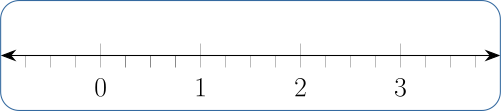
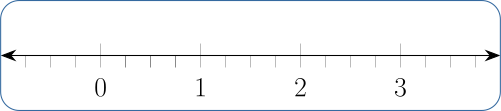
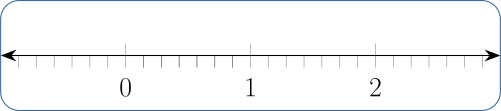
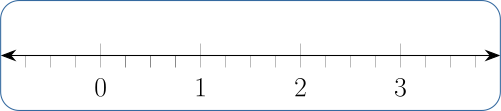
Two different-looking fractions can represent the same amount. Consider \(\frac{2}{5}\) and \(\frac{6}{15}\) represented in various ways in Figure 1–Figure 3.
The two fractions \(\frac{2}{5}\) and \(\frac{6}{15}\) are equal, as these figures show. Both fractions are equal to \(0.4\) as a decimal. If we must work with this number as a fraction, the version that uses smaller numbers, \(\frac{2}{5}\text{,}\) is preferable. Working with smaller numbers decreases the likelihood of making a human error.
So if you have a fraction like \(\frac{6}{15}\text{,}\) it’s important to try to reduce it to “lowest terms”. The most important skill you can have to help you do this is to know the multiplication table well. If you know it well, you know that \(6=2\cdot3\) and \(15=3\cdot5\text{,}\) so you can break down the numerator and denominator that way. Both the numerator and denominator are divisible by \(3\text{,}\) so these \(3\)s can cancel out.
Sayid scored \(\frac{21}{25}\) on a recent exam. Build up this fraction so that the denominator is \(100\text{,}\) so that Sayid can understand what percent score he earned.
To change the denominator from \(25\) to \(100\text{,}\) it needs to be multiplied by \(4\text{.}\) And then we are obligated to also multiply the nuemrator by \(4\text{.}\) So we have:
FactA.1.6.Multiplying a Fraction and a Whole Number.
When you multiply a whole number by a fraction, you may just multiply the whole number by the numerator and leave the denominator alone. In other words, a whole number and a fraction multiply this way:
\begin{equation*}
a \cdot \frac{c}{d} = \frac{a\cdot c}{d}
\end{equation*}
Multiplying the \(5\) with the numerator \(2\) gives a new numerator \(10\text{.}\) We keep the denominator \(9\) and the answer is \(\frac{10}{9}\text{.}\)
Before we multiply, we can do some simplfication first. We want to make \(\frac{12\cdot7}{3}\text{,}\) but now we can cancel a factor of \(3\text{.}\) We have, \(\frac{\cancelto{12}{4}\cdot7}{\cancelto{3}{1}}\text{.}\) So we have \(\frac{28}{1}\text{,}\) or just \(28\text{.}\)
Before we multiply, we can do some simplfication first. We want to make \(\frac{14\cdot5}{6}\text{,}\) but now we can cancel a factor of \(2\text{.}\) We have, \(\frac{\cancelto{14}{7}\cdot5}{\cancelto{6}{3}}\text{.}\) So we have \(\frac{35}{3}\text{.}\)
Before we multiply fractions, note that \(\frac{12}{3}\) reduces to \(4\text{,}\) and \(\frac{15}{3}\) reduces to \(5\text{.}\) So we just have \(4\cdot5=20\text{.}\)
Multiplying numerators gives \(28\text{,}\) and multiplying denominators gives \(15\text{.}\) The result should be negative, so the answer is \(-\frac{28}{15}\text{.}\)
Before we multiply fractions, note that \(\frac{12}{-20}\) reduces to \(\frac{-3}{5}\text{.}\) So we have \(\frac{70}{27}\cdot\frac{-3}{5}\text{.}\) Both the numerator of the first fraction and denominator of the second fraction are divisible by \(5\text{,}\) so it helps to reduce both fractions accordingly and get \(\frac{14}{27}\cdot\frac{-3}{1}\text{.}\) Both the denominator of the first fraction and numerator of the second fraction are divisible by \(3\text{,}\) so it helps to reduce both fractions accordingly and get \(\frac{14}{9}\cdot\frac{-1}{1}\text{.}\) Now we are just multiplying \(\frac{14}{9}\) by \(-1\text{,}\) so the result is \(\frac{-14}{9}\text{.}\)
We know that dividing something by \(2\) is the same as multiplying it by \(\frac{1}{2}\text{.}\) This works in the other direction too: dividing by \(\frac{1}{2}\) is the same as multiplying by \(\frac{2}{1}\text{,}\) or just \(2\text{.}\) The more general property is that dividing by \(\frac{a}{b}\) is equivalent to multiplying by the reciprocal \(\frac{b}{a}\text{.}\)
With whole numbers and integers, addition and subtraction are straightforward. The situation is almost as straightforward with fractions if the two fractions have the same denominator. Consider
Since the denominators are both \(6\text{,}\) we can subtract the numerators: \(13-5=8\text{.}\) The answer is \(\frac{8}{6}\text{,}\) but that reduces to \(\frac{4}{3}\text{.}\)
But what if the denomiators are not the same? Whenever we’d like to add or subtract fractions with differing denominators, finding sums and differences is more complicated.
So if you know what to look for, the expression \(\frac{3}{4}+\frac{2}{10}\) is like adding \(75\) cents and \(20\) cents, which gives you \(95\) cents. As a fraction of one dollar, that is \(\frac{95}{100}\text{.}\) So we can report
This example was not something you can apply to other fraction addition situations, because the denominators here worked especially well with money amounts. But there is something we can learn here. The fraction \(\frac{3}{4}\) was equivalent to \(\frac{75}{100}\text{,}\) and the other fraction \(\frac{2}{10}\) was equivalent to \(\frac{20}{100}\text{.}\) These equivalent fractions have the same denominator and are therefore “easy” to add. What we saw happen was:
FactA.1.16.Adding/Subtracting Fractions with Different Denominators.
To add (or subtract) generic fractions together, use their denominators to find a common denominator. This means some whole number that is a whole multiple of both of the original denominators. Then rewrite the two fractions as equivalent fractions that use this common denominator. Write the result keeping that denominator and adding (or subtracting) the numerators. Reduce the fraction if that is useful or required.
We need to compute \(\frac{2}{3} - \frac{1}{8}\text{.}\) The denominators are \(3\) and \(8\text{.}\) One common denominator is \(24\text{,}\) so we move to rewrite each fraction using \(24\) as the denominator:
The numerical result is \(\frac{13}{24}\text{,}\) but a pure number does not answer this question. The amount of flour remaining is \(\frac{13}{24}\)cups.
cups unbleached, all-purpose flour (more for dusting)
Each ingredient is listed as a mixed number that quickly communicates how many whole amounts and how many parts are needed. It’s useful for quickly communicating a practical amount of something you are cooking with, measuring on a ruler, purchasing at the grocery store, etc. But it causes trouble in an algebra class. The number \(1\,\sfrac{1}{2}\) means “one and one half”. So really,
The trouble is that with \(1\,\sfrac{1}{2}\text{,}\) you have two numbers written right next to each other. Normally with two math expressions written right next to each other, they should be multiplied, not added. But with a mixed number, they should be added.
Fortunately we just reviewed how to add fractions. If we need to do any arithmetic with a mixed number like \(1\,\sfrac{1}{2}\text{,}\) we can treat it as \(1+\frac{1}{2}\) and simplify to get a “nice” fraction instead: \(\frac{3}{2}\text{.}\) A fraction like \(\frac{3}{2}\) is called an improper fraction because it’s actually larger than \(1\text{.}\) And a “proper” fraction would be something small that is only part of a whole instead of more than a whole.